

 Sanjay Chaudhary
It might surprise you to learn that black pepper and white pepper come from the exact same plant, Piper nigrum. The difference isn’t the plant – it’s how the berries are processed after harvest, and that single step changes the flavour, appearance, and best use of each spice significantly. Here’s what actually sets them apart.
What Is Black Pepper?
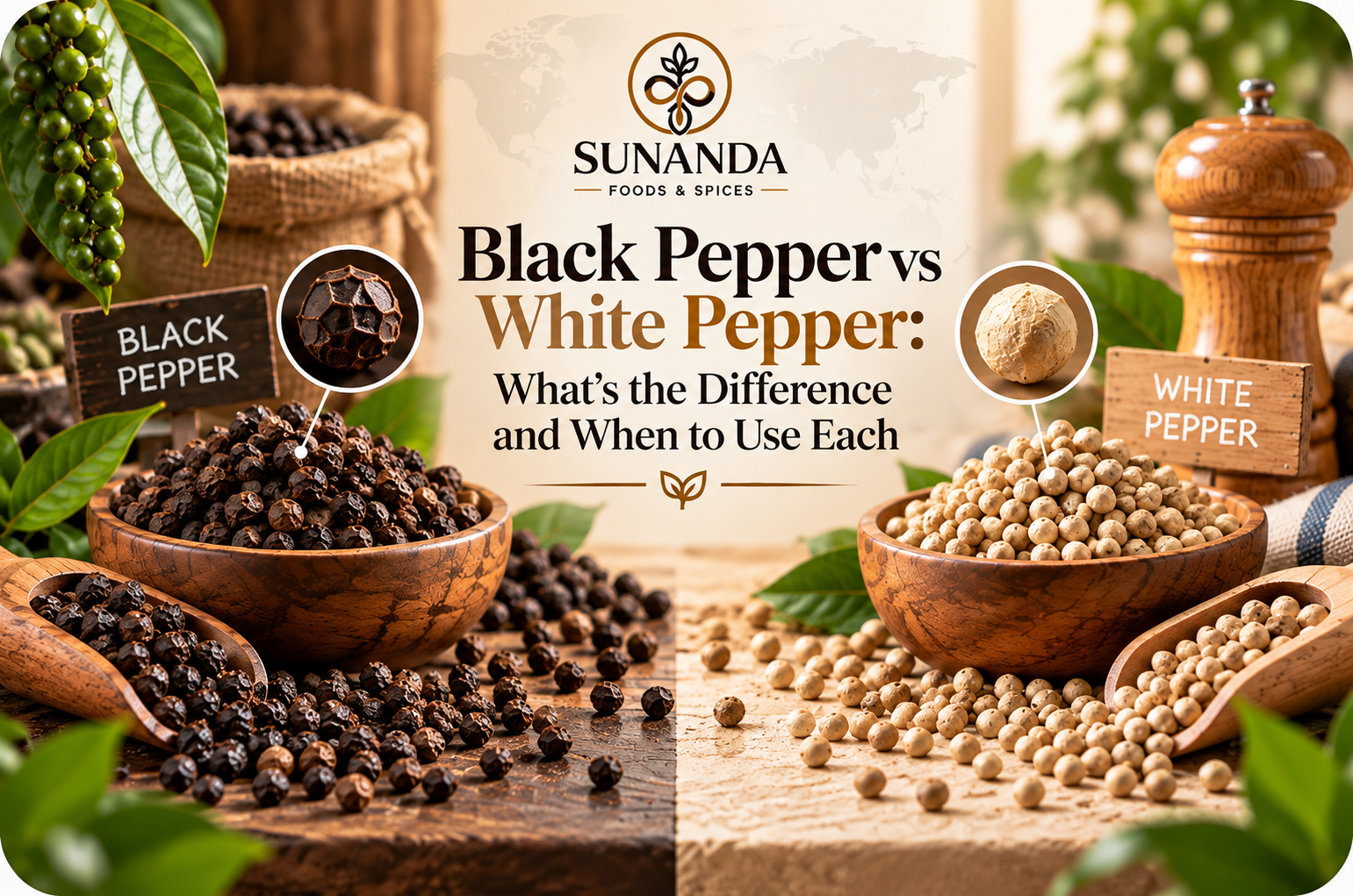
Black pepper is made by harvesting the pepper berries while still green and slightly underripe, then drying them whole in the sun. This drying process causes the outer skin to shrivel and darken, giving black peppercorns their characteristic wrinkled, dark appearance and sharp, robust flavour.
What Is White Pepper?
White pepper is made from fully ripened pepper berries that are soaked in water until the outer skin softens and can be removed, leaving just the inner seed. Without the outer layer, white pepper has a smoother appearance, a milder aroma, and a slightly different, more earthy heat compared to black pepper.
Key Differences Between Black and White Pepper
- Processing: Black pepper is dried with its skin intact; white pepper has the outer skin removed
- Flavour: Black pepper is sharper and more pungent; white pepper is milder with a subtler, earthier heat
- Appearance: Black pepper is dark and wrinkled; white pepper is smooth and pale
- Visibility in dishes: White pepper blends into light-coloured sauces and dishes without leaving visible dark specks
Which One Should You Use?
Best Uses for Black Pepper
Black pepper works well in most everyday cooking – curries, marinades, soups, grilled meats, and general seasoning – wherever its bold flavour and visible specks aren’t a concern.
Best Uses for White Pepper
White pepper is the preferred choice in light-coloured dishes like white sauces, mashed potatoes, or creamy soups, where you want the peppery heat without visible dark flecks disrupting the dish’s appearance.
How to Choose High-Quality Pepper
Whichever type you choose, freshness makes a significant difference. Look for whole peppercorns over pre-ground powder where possible, since whole peppercorns retain their essential oils – and therefore their flavour – for much longer. If buying ground pepper, check for a strong aroma and avoid products that appear dull or overly powdery, which often indicates older stock.
Final Thoughts
Black and white pepper may come from the same berry, but they bring genuinely different qualities to your cooking. Keeping both on hand gives you more flexibility – bold black pepper for everyday dishes, and milder white pepper for recipes where appearance and subtlety matter.
Looking for high-quality whole or ground pepper for your kitchen or business? Explore Sunanda Foods & Spices’ range of whole spices, sourced and processed to preserve natural aroma and flavour.
Frequently Asked Questions
Is white pepper spicier than black pepper?
Not necessarily spicier, but the heat profile differs – white pepper tends to have a more earthy, slightly fermented heat, while black pepper is sharper and more pungent.
Can I substitute white pepper for black pepper in a recipe?
Yes, in most recipes they can be substituted for one another, though the flavour and appearance of the final dish will change slightly.
Why is white pepper more expensive than black pepper in some markets?
White pepper requires additional processing steps, including soaking and skin removal, which adds to production time and cost compared to simply sun-drying whole black peppercorns.