
 Sanjay Chaudhary
The internet has made it easier than ever to access Indian spices from anywhere in the world — but it has also made it easier to end up with something substandard. Dull turmeric padded with artificial colour, ground cumin diluted with cheaper fillers, or blends that smell of nothing the moment you open the bag. Shopping for authentic Indian spices online takes more than clicking the first result. This guide covers exactly what to check, what to avoid, and how to find a supplier you can genuinely trust.
Why Authenticity Is Non-Negotiable When Buying Spices Online
Unlike buying in person, online shopping removes your ability to smell, feel, or inspect a product before it arrives. That sensory gap matters enormously with spices, because quality and purity are nearly invisible in a product photo. Adulterated spices don’t just disappoint at the dinner table — they can carry chemical residues, artificial dyes, and excess moisture that pose real food safety risks.
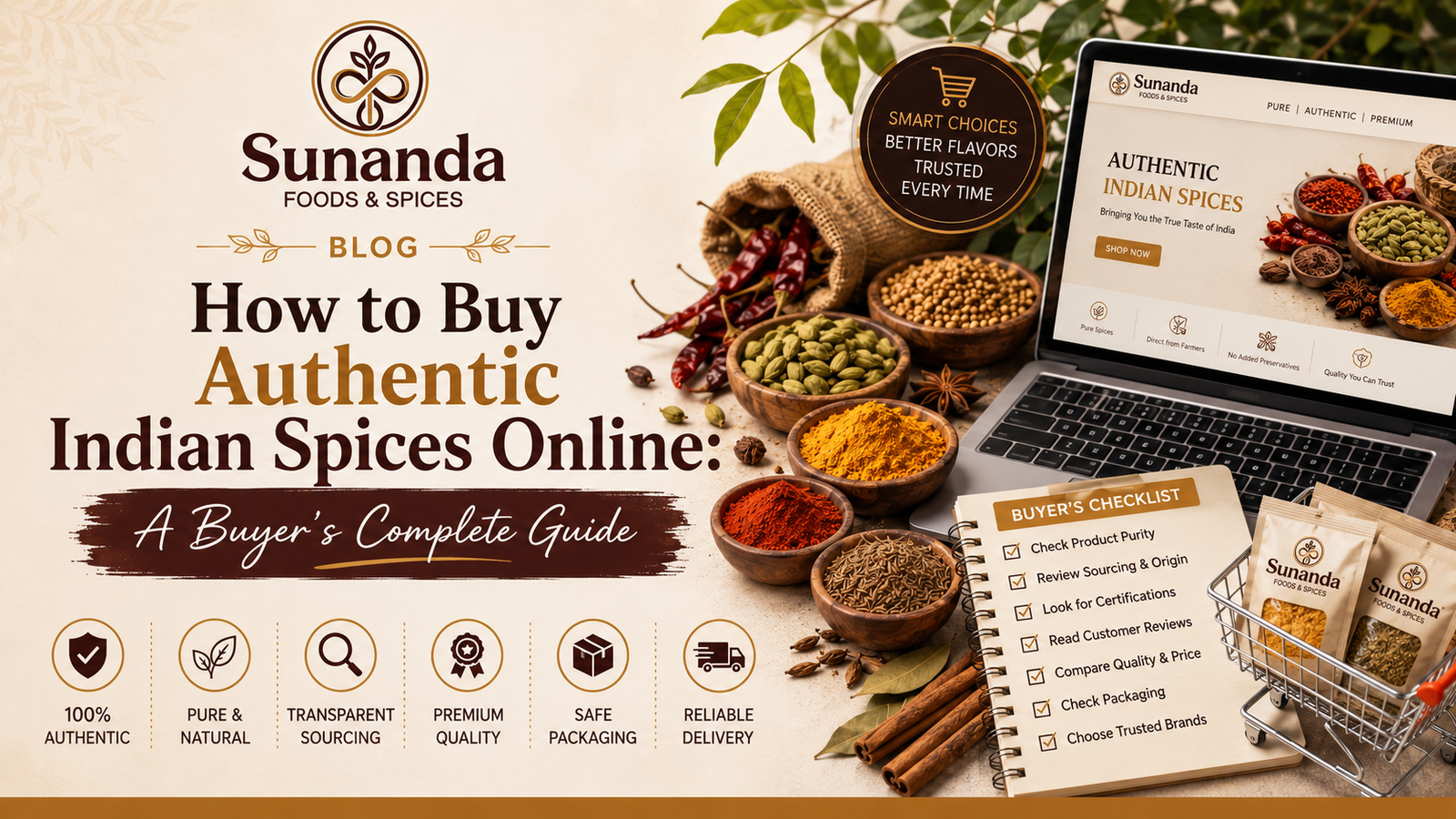
7 Things to Check Before Buying Indian Spices Online
1. Verify Food Safety Certifications
A genuine Indian spice supplier will clearly display regulatory credentials — FSSAI registration is the baseline for any India-based seller, while ISO certification, Spices Board India recognition, APEDA registration, and Halal or FDA certifications all add further layers of accountability. If a seller doesn’t mention a single certification, treat that as an immediate red flag.
2. Look for Sourcing Transparency
Reliable suppliers know where their raw spices come from and are willing to say so. Look for sellers who mention specific sourcing regions or direct farm relationships. Vague language like “premium quality” with no sourcing detail is a common sign of a middleman with little control over what actually goes into the product.
3. Ask About the Processing Method
Grinding method has a direct impact on the flavour and aroma of every spice you buy. Low-heat grinding preserves the essential volatile oils that carry a spice’s character; high-speed heat-generating grinding can burn those oils off before the product is even packed. A transparent supplier will tell you exactly how their spices are processed — if they can’t or won’t, look elsewhere.
4. Examine Packaging Standards
Authentic spices should arrive in sealed, airtight, moisture-proof packaging with a printed manufacturing date, best-before date, batch number, and FSSAI licence. Anything arriving in a loosely sealed bag, with missing label information, or without tamper-evident seals should be returned or avoided entirely.
5. Read Reviews From Verified Buyers
Customer reviews remain one of the most practical guides to what actually arrives. Look specifically for comments about aroma, colour intensity, and flavour — sensory details that can’t be faked. A high star rating with only generic praise is far less useful than a review from someone who notes the turmeric is vivid and pungent, or the cumin smells like it was just ground.
6. Check for Lab Testing or Quality Reports
Premium Indian spice suppliers increasingly publish third-party lab test results, microbial reports, or quality audit summaries on their website or on request. These aren’t always easy to find, but asking for them is a perfectly reasonable part of a purchasing decision — especially for bulk orders.
7. Assess Customer Support Before You Buy
Send a question to the supplier before placing your first order. How quickly they reply, how specifically they answer, and whether they’re willing to share certifications or processing details on request tells you a great deal about how they’ll behave if something goes wrong post-purchase.
Red Flags to Watch Out For
Watch out for pricing that’s suspiciously lower than market average (often a sign of adulteration), no certifications listed, no contact information beyond a generic email, and an inability to explain sourcing or processing. Products that arrive with unnaturally vivid, perfectly uniform colour but almost no aroma — despite a recent packing date — frequently contain added colourants rather than natural pigment.
Why Sunanda Food & Spices Is a Trusted Source for Authentic Indian Spices
At Sunanda Food & Spices, every point on this checklist is one we’ve built our process around. Based in Gandhinagar, Gujarat, and operating under FSSAI, ISO, APEDA, Spices Board India, Halal, and FDA recognised certifications, we source directly from trusted farms, clean and grade all raw material, and use low-heat grinding to lock in aroma and flavour. Every batch ships in hygienic, airtight, fully labelled packaging with traceable batch details. We supply home cooks, restaurant kitchens, and international buyers — and we’re happy to share certifications before you commit to an order. Explore our complete spice range or contact us today.
Final Thoughts
Buying authentic Indian spices online is absolutely possible — you just need to know what a trustworthy supplier looks like and hold every seller to the same standard. Certifications, sourcing transparency, processing method, proper packaging, and responsive communication are the five pillars that separate a genuine spice brand from a generic reseller. Take the time to verify them once, and you’ll find a supplier worth reordering from for years.